Categories
Procedure

 USA


Documents & resources

Education

C-code lookup
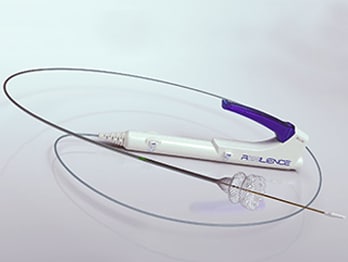
When esophageal strictures require structural support, our fully covered stent portfolio delivers accurate placement, minimal migration, and proven clinical results. The established EndoMAXX™ and AliMAXX-ES™ as well as the new Resilience™ Through-the-Scope (TTS) Esophageal Stent System support you with the right stent for every clinical scenario.
Endoscopic balloon dilation is the cornerstone of esophageal stricture management. Elation5™ expands the treatment range on a single catheter, reducing the need for multiple balloons. The Elation™ 3-Stage Wireguided and Fixed-Wire balloons complete the portfolio for every access approach.
Precision dilation starts with a precision inflation system. The BIG60 ALPHA™ Inflation Device pairs with Elation balloons for a complete dilation system. It features a large handle with integrated release trigger to meet inflation and deflation needs in a variety of interventional procedures.
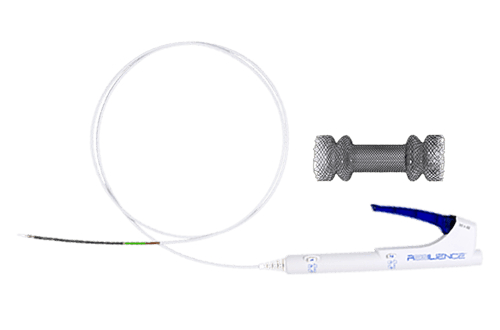
The Resilience TTS Esophageal Stent is designed to demonstrate the greatest migration resistance among currently available TTS stents.1 A wide range of size options help you meet a variety of clinical needs, including treatment of short strictures.1
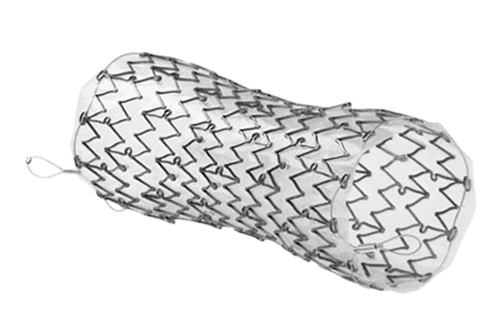
The EndoMAXX Fully Covered Esophageal Stent is designed from years of clinical experience and feedback. This stent incorporates advanced features that help alleviate common challenges associated with esophageal stenting.
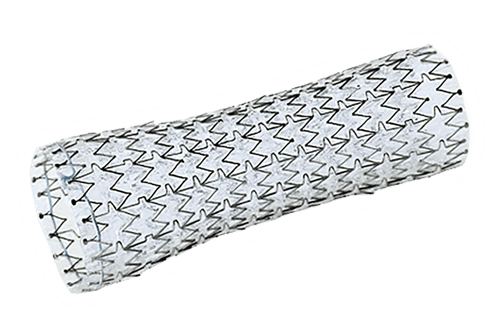
The AliMAXX-ES Fully Covered Esophageal Stent incorporates anti-migration technology with low radial force and includes unique small diameter sizing.
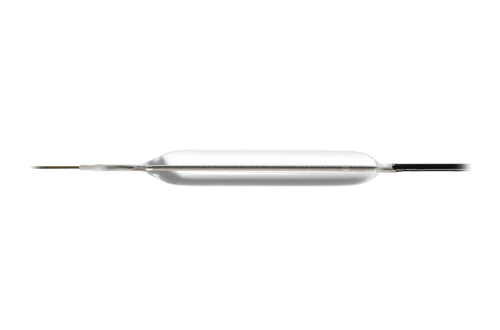
Elation5 expands the treatment range with a single balloon and maintains all the premium qualities found in the legacy Elation balloon design.
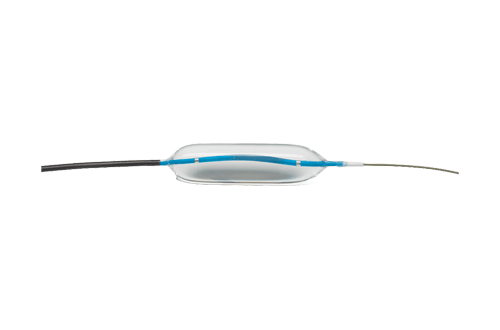
The Elation 3-Stage Wireguided Dilation Balloon features the premium quality found in all Elation balloons and provides a guide wire to help manage strictures with difficult access.
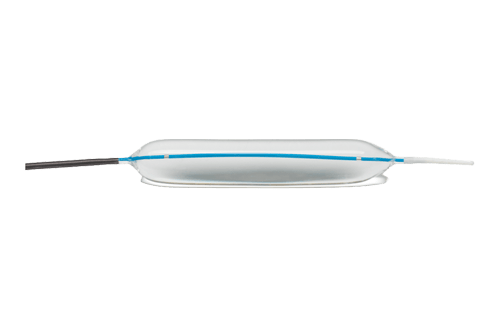
The Elation 3-Stage Fixed-Wire Dilation Balloon features the premium quality found in all Elation balloons. Its proprietary balloon and catheter designs support deflation and removal from the scope.
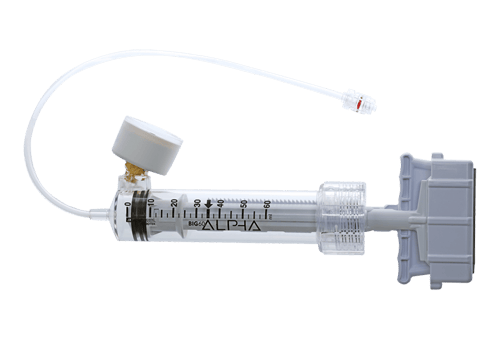
The BIG60 ALPHA Inflation Device pairs with Elation dilation balloons to offer a complete system. Featuring a 12 ATM capability and 60 mL capacity, the large handle with integrated release trigger facilitates inflation and deflation during dilation procedures.
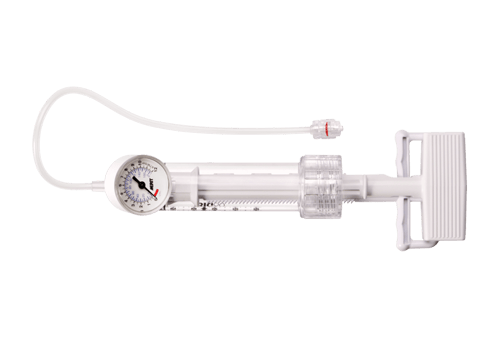
The BIG60 Inflation Device pairs with Elation dilation balloons to offer a complete dilation system. A lock-release handle supports inflation and deflation. High-pressure tubing facilitates device positioning when attached to a balloon catheter.


Merit Medical offers three fully covered esophageal stent options for stricture management. The Resilience is a new TTS esophageal stent with a proprietary double-flange design that acts as an anti-migration feature to anchor the stent in place. 1,2 The EndoMAXX is a fully covered, laser-cut esophageal stent with anti-migration struts that is designed from years of clinical experience. The AliMAXX-ES is a fully covered stent with low radial force and unique small-diameter sizing.
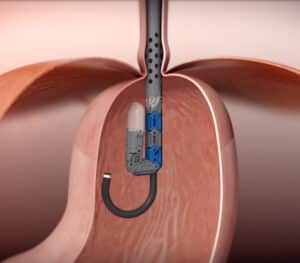
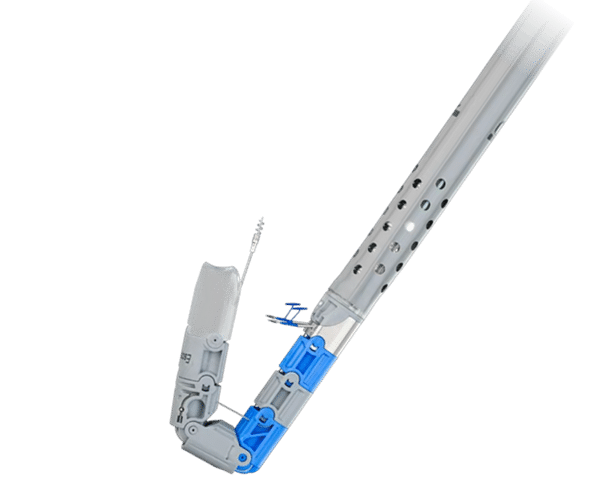
A TTS stent, such as our new Resilience TTS Esophageal Stent System, is deployed directly through the working channel of an endoscope without requiring a guide wire for delivery. This can reduce stent placement procedure time.3 Over-the-wire stents require a guide wire placed across the stricture for delivery. The choice between TTS and over-the-wire stents depends on the clinical situation, the location and nature of the stricture, and physician preference.
Our Resilience TTS Esophageal Stent System features proprietary double flanges1 designed to demonstrate the greatest migration resistance among currently available TTS stents.1 A ratcheted handle delivers controlled stent deployment while minimizing potential stent jumping.1 The stent is fully covered in silicone to minimize tissue ingrowth.1
Balloon dilation is typically the preferred first-line treatment for benign esophageal strictures, including refractory benign esophageal strictures (RBES). Esophageal stenting is generally used for malignant strictures requiring palliative management, esophageal perforations or leaks, post-surgical complications, and cases where dilation alone is insufficient. The decision between dilation and stenting depends on the underlying cause of the stricture, patient clinical factors, and the treating physician’s judgment.
Our BIG60 ALPHA Inflation Device is designed to pair with Elation dilation balloons to offer a complete dilation system. Explore our inflation devices and dilation balloons.
Please contact your Merit Medical representative for reimbursement information.
Please contact Merit Medical Customer Service for further assistance.

An 80-year-old female with a history of squamous cell carcinoma of the vocal cords was previously treated with definitive chemotherapy and radiation. She has been suffering from recurrent aspiration pneumonia but has had no prior dysphagia until a hospitalization for melena one year prior. Initial EGD showed LA Grade D reflux with circumferential esophagitis and a 4 cm hiatal hernia.

A 76-year-old male with progressive solid-food dysphagia and a long history of tobacco use was found to have a malignant-appearing, partially obstructing mass spanning 1-2 cm of the mid esophagus, with biopsies demonstrating poorly differentiated adenocarcinoma. Subsequent imaging revealed liver metastases confirming Stage IV disease. Oncology referred the patient for indefinite palliative esophageal stent placement to allow improved oral nutrition and quality of life while undergoing chemotherapy.

“It is more cost effective to use a five-stage balloon than to use two three-stage balloons.”
Bradley Confer, DO
Geisinger Medical Center, Gastroenterology

“The near immediate expansion combined with the unique struts temper unwanted migration over time.”
Stuart Amateau, MD, PhD
University of Minnesota Medical Center, Interventional Gastroenterology
 Give your patients the knowledge and comfort they need. This brochure contains information about life with a stent, food and drink recommendations, and more.
 Ensure your patients have the knowledge they need. This brochure contains information about the dilation process, risks involved, and what to expect after an esophageal dilation.

Presenter: Bradley Confer, DO
Recorded: May 19, 2020

Presenter: Adam W. Templeton, MD
Recorded: November 5, 2020
Dr. Adler provides instructions on how to use the EndoMAXX deployment system and reviews procedure flow.
Dr. Adler reviews principles for removing esophageal stents, including a case study on EndoMAXX removal.
Dr. Adler provides a case review of a patient who requires an esophageal stent across the gastroesophageal junction. Considerations for esophageal stent placement across the gastroesophageal junction are also discussed.
Dr. Adler shares a case with a proximal esophageal stent placement using EndoMAXX and discusses guiding principles for proximal esophageal stent placement.
References
1. Data on File.
2. Mozafari et al. 2018. Comput Biol Med. doi: 10.1016/j.compbiomed.2018.06.031.
3. Mangiavillano et al. 2021. Dig Endosc. doi: 10.1111/den.13704.
408897001_001 ID 110926