

Categories
Procedure

 USA
USA

This UK Modern Slavery and Human Trafficking Statement (“Statement”) describes the steps taken by Merit Medical Systems, Inc. and its subsidiaries (“Merit”) during the fiscal year ended 31 December 2025 to address modern slavery and/or human trafficking risks in its business and supply chains.
Merit upholds the highest ethical standards and is committed to good corporate citizenship. This Statement outlines Merit’s commitment to identify and address the risks of modern slavery practices in its operations and supply chains. With a company culture proudly centered around a safe and enjoyable workplace, working to mitigate the risk of modern slavery and/or human trafficking practices within Merit’s operations, as well as Merit’s supply chains is a top priority. Merit recognizes that modern slavery and/or human trafficking practices are not always easy to identify in supply chains outside of its direct control and therefore takes a risk-weighted approach in identifying elements of its supply chain considered to be most at risk.
This Statement aligns with the UK Modern Slavery Act 2015 (“Modern Slavery Act”) in which modern slavery offences [Note British spelling, which probably tracks the MSA, but consider if we should use the US spelling] refer to situations where coercion, threats, deception, violence, or abuse of power are used to exploit victims and undermine or deprive them of their liberty. These could include slavery, servitude, human trafficking, forced labor, debt bondage, forced marriage, deceptive recruiting for labor or services, and any form of child labor.
Merit is committed to assessing and enabling a level of confidence to shareholders and other stakeholders that modern slavery risks and/or practices are identified and managed. Merit has senior staff assessing modern slavery risks on an ongoing basis and has implemented a third-party software tool to assist in the mapping of its supply chain to include risk mapping in areas where the risk of modern slavery has, historically, been an issue. Merit recognizes that tackling the risk of modern slavery and/or human trafficking in its supply chain will take ongoing commitment, time and resources and require awareness and education of its stakeholders.
Founded in 1987, Merit set out to build the world’s most customer-focused healthcare company by understanding customers’ needs and innovating and delivering a diverse range of products that improve the lives of people, families, and communities throughout the world.
Merit’s products are used in the following clinical areas: radiology; diagnostic and interventional cardiology; interventional radiology; neurointerventional radiology; vascular, general and thoracic surgery; electrophysiology; cardiac rhythm management; interventional pulmonology; interventional nephrology; orthopedic spine surgery; interventional oncology; pain management; breast cancer surgery, outpatient access centers; intensive care; imaging; and interventional gastroenterology.
Merit maintains a diverse, multi-campus manufacturing footprint in North America, South America, Europe and Asia, with a global distribution network focused on delivering our products and technologies to its customers.
Merit is a global company with international operations, and sells its products in countries throughout the world. Merit employs approximately 7,400 people in approximately 40 different countries. Details of Merit’s organization and operations can be found on https://www.merit.com/investors/reports-statements/.
Merit’s Board of Directors (the “Board”) supports Merit’s commitment to identify and address modern slavery and human trafficking risks, having appropriate policies, processes and planning for situations where corrective action is needed. Management provides updates to the Board on Merit’s compliance with this Statement annually.
Merit has more than 1034 direct suppliers with Merit’s top 78 suppliers representing more than 65% of its annual spend. Merit’s suppliers span the globe, however 49% of its suppliers are located within the continental United States. Merit’s risk assessments consider countries of origin, annual spend, and the term of the relationship with Merit. Merit recognizes that a small portion of its suppliers (less than 10%) supply products to Merit containing gold, tin, tungsten and tantalum. Merit complies with the United States Securities and Exchange Commission(“SEC”) requirement to submit a Conflict Minerals Reporting Template (CMRT) annually.
Merit’s procurement strategy focuses on long-term supplier relationships, analytics and risk management. Supplier choice reflects purchasing scale, product quality and supply chain risk mitigation.
Merit’s business relies on global supply networks. Therefore, it is important to identify and take action to remedy modern slavery risks in global supply chains where local laws and regulations may be wanting. Merit understands that a safe and ethical business incorporates not just the human rights of its direct operations but also that of its suppliers. Merit has partnered with a third-party to assist in the process of assessing modern slavery and/or human trafficking risks for its “tier 1” suppliers (those vendors and suppliers with whom Merit has a direct relationship). In future, Merit aims to assess “tier 2” suppliers (those vendors and suppliers of Merit’s “tier 1” suppliers).
Merit has assessed its own operations and considers there to be low risk of modern slavery and/or human trafficking in those operations. Merit’s Human Resource team has implemented processes for vetting new employees and verifying that they have the requisite visa status to work in the countries where applicable. Merit also has robust processes in place for assessing the hourly wage rates and salaries of its employees and verifying that payments are made directly to those parties. When new employees are offered employment with Merit, they are provided with copies of Merit’s employment policies and Merit’s employee handbook, which set out the requirements and expectations on employees, and applicable standard procedures and policies, including Code of Business Conduct and Ethics. When new employees commence employment with Merit, they are taken through a comprehensive induction process which informs them of the importance of Merit’s culture and its principles, as well as employment policies, promoting a culture in which Merit employees understand Merit’s high standards. The majority of Merit’s employees are permanent and full-time.
Merit employees, directors and agents are held accountable for adhering to Merit’s Code of Business Conduct and Ethics in all aspects of business, including dealings with suppliers and business partners. Merit employees involved in purchasing, supplier management and sales functions are trained on specific responsibilities regarding corporate social responsibility and labor standards, including requirements that arise under customer relationships or the Modern Slavery Act and the California Transparency in Supply Chains Act.
Merit maintains long-term, trusting relationships with suppliers who have strong reputations, ethics, and reliable business practices. Merit does not knowingly engage with any supplier who is in violation of fundamental human rights or is engaging in modern slavery and/or human trafficking practices, however Merit acknowledges that there is always some risk when operating with third parties as part of a global supply chain. Risk assessment is conducted via the use of a risk matrix designed by Merit. Merit’s risk matrix considers several risk factors of which include spend with Merit, term of relationship with Merit, and supplier origin risk.
Merit has policies and standards in place to protect human rights within operations and supply chains. These policies and standards outline the principles, standards and behaviors expected to be upheld by Merit employees, contractors, and suppliers. Policies that set out Merit’s commitment to comply with the legal requirements of the Modern Slavery Act and the California Transparency in Supply Chains Act include Merit’s Code of Business Conduct and Ethics, Code of Conduct for Suppliers, and Global Compliance Policy. Merit has also developed a Human Rights and Labor Standards Policy and maintains an Ethics Alert Line for the anonymous reporting of real or suspected violations to its policies. Merit investigates allegations of non-compliance with its policies and procedures. Violations of Merit’s Code of Business Conduct and Ethics may result in disciplinary action, including termination of employment or agreement. Merit will also consider the potential termination of business relationships, depending on the outcome of assessments, audits and the failure to take satisfactory corrective action.
Merit audits its suppliers and business partners periodically. Merit utilizes surveys and an audit schedule to promote compliance with Merit’s performance and quality expectations. Surveys and audits are performed by Merit employees and currently focus on social responsibility, quality, and performance issues. The frequency of surveys and audits is based upon Merit’s assessment of potential risk and performance. Depending on responses addressing human rights, labor standards and business ethics, and how suppliers and business partners are classified according to Merit’s risk rating, Merit may begin conducting audits from higher-risk suppliers on their labor standards.
Merit utilizes supply agreements, distribution agreements, quality agreements and/or purchase order terms and conditions for controlling relationships with suppliers and business partners. These agreements include commitments of suppliers and business partners to comply with laws and regulations applicable to the service or material provided. Additionally, through Merit’s annual supplier due diligence relative to conflict minerals regulations in the United States (as directed by the Dodd-Frank Wall Street Reform and Consumer Protection Act of 2010), Merit conducts country-of origin inquiries regarding the origin of certain materials. As recognized by the Organization of Economic Cooperation and Development, the objective of the law is to help companies respect human rights and avoid contributing to conflict through their mineral sourcing practices. Merit files its annual Conflict Minerals Report annually with the SEC and provides the report externally on its website at Merit.com/compliance/. This annual due diligence on conflict minerals is expanded to satisfy analogous EU legislation on conflict minerals for EU importers, including any audit requirements.
Merit’s policies and codes of conduct provide important guidelines for interactions of Merit employees with customers, suppliers and other business partners, and one another. Merit’s business colleagues are encouraged to raise concerns; this includes violations of Merit’s code(s) of conduct, Merit’s company policies, and the laws of the countries in which Merit operates. Merit maintains an anonymous third-party administered Alert Line mechanism in place to collect and relay information regarding potential violations to appropriate company resources for review and follow up action.
Further, external parties may report suspected concerns with modern slavery and/or human trafficking anonymously via Merit’s Alert Line available at www.merit.com/compliance/. Merit will record formal or anonymous reports of breaches and assess the appropriate course of action in relation to the certainty of the breach and further investigation.
Merit recognizes that tackling the risk of modern slavery and/or human trafficking in supply chains will take ongoing commitment, time, and resources and requires awareness and ongoing education of all stakeholders. Merit commits to encouraging labor standards throughout its value chain and supply chain and commits to implementing measures of effectiveness through its annual statements.
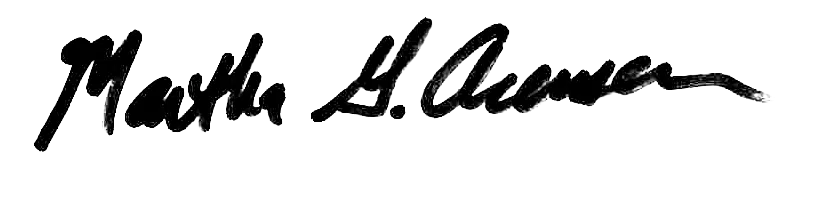
Martha G. Aronson,
President and Chief Executive Officer
Date: 21 February 2026
*This statement has been approved by the Board of Directors.


