Categories
Procedure

 USA


Documents & resources

Education

C-code lookup
StatSeal accelerates hemostasis and standardizes hospital procedures, shortening recovery, enabling same-day discharge, and reducing complications across a range of high-volume procedures.1-4
Unlike other hemostats or patches, StatSeal dehydrates and binds blood proteins, using a hydrophilic polymer and potassium ferrate, to create a durable seal without relying on the clotting cascade.
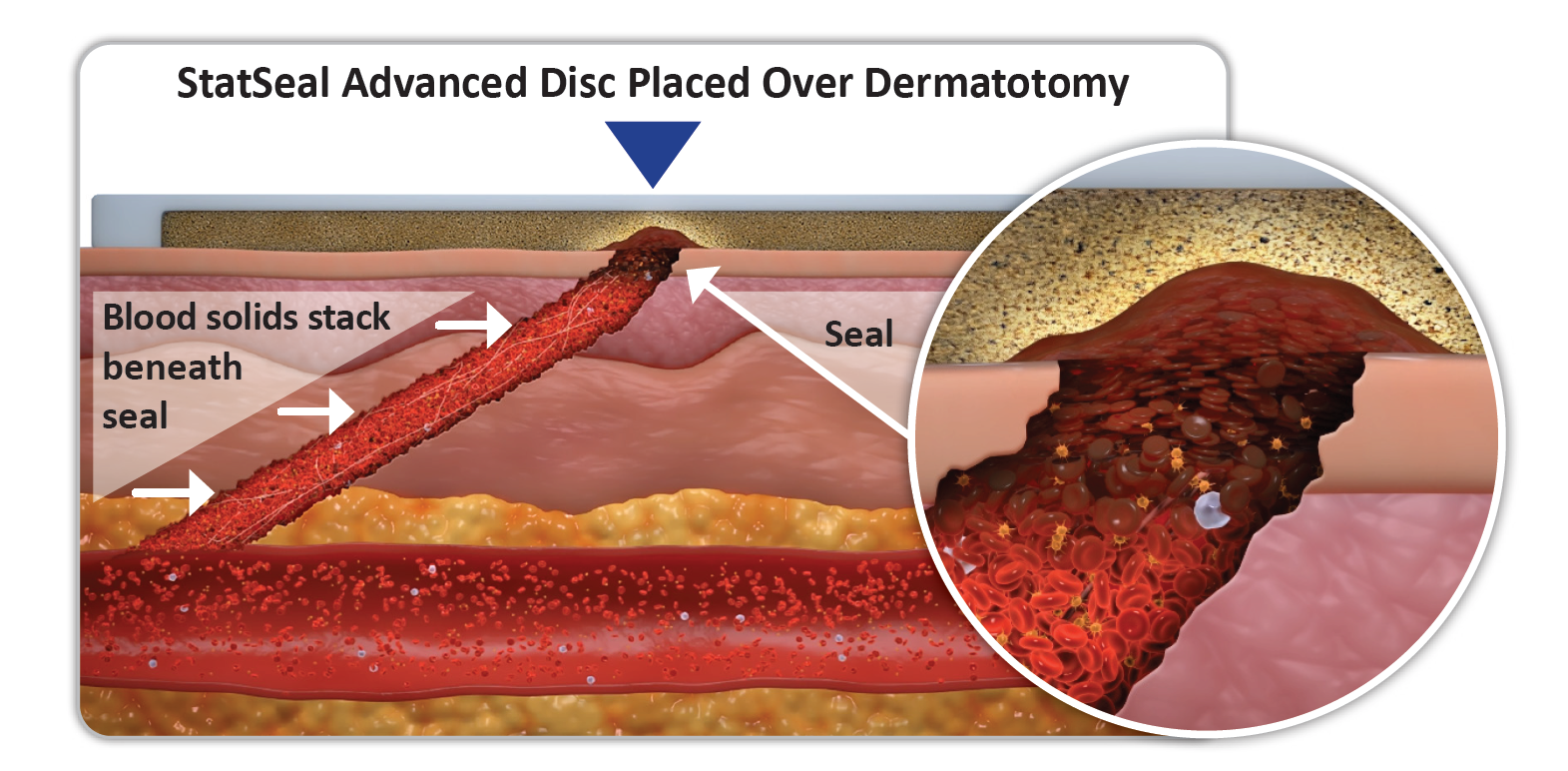
StatSeal works. It creates a seal that stops the bleeding quickly, so that you can move confidently to your next patient/case.5
StatSeal is instant. It creates an immediate occlusive occlusive seal that forms a protective barrier at that access site.5
StatSeal is unbiased. It works independently of the clotting cascade for universal application, even for patients prone to bleeding.1-3
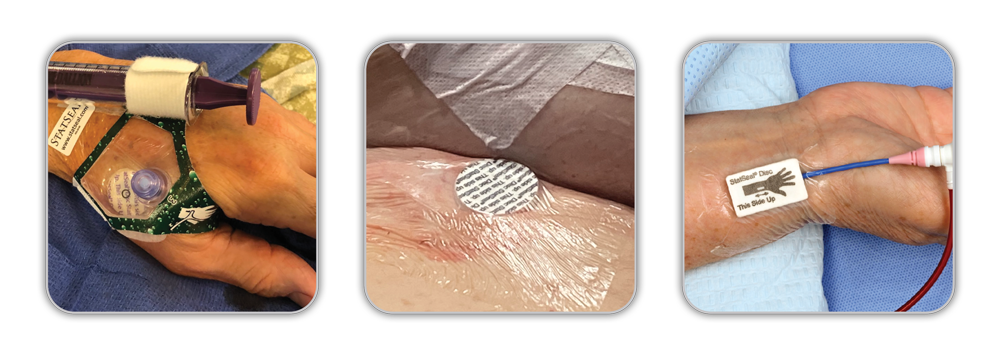
Advanced disc products support temporary control of bleeding from sheath and catheter removals.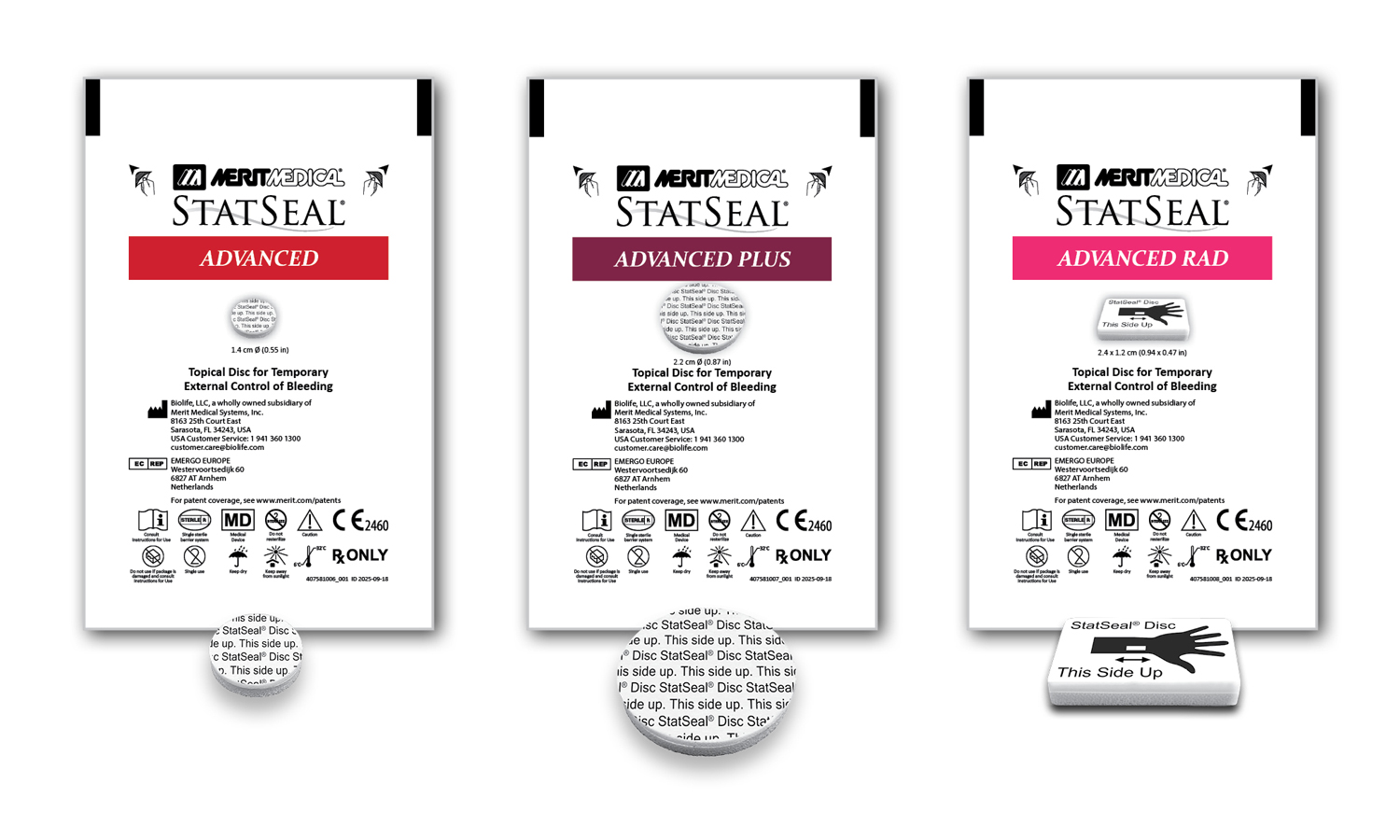
Before using, refer to Instructions for Use for indications, contraindications, warnings, precautions, and directions for use.
REFERENCES
1. Proscia et al. 2025. Int J Cardiol. doi: 10.1016/j.ijcard.2024.132740.
2. Safirstein et al. 2022. JACC Cardiovasc Interv. doi: 10.1016/j.jcin.2021.12.030.
3. Bagur et al. 2022. Int J Cardiol. doi: 10.1016/j.ijcard.2021.11.011.
4. Ayyaz et al. 2018. Cardiovasc Revasc Med. doi: 10.1016/j.carrev.2018.03.026.
5. Data on File.
6. Wang et al. 2008. J Vasc Interv Radiol. doi: 10.1016/j.jvir.2007.08.028.
7. Zhang et al. 2025. EP Europace. doi: 10.1093/europace/euaf085.412.
408722001_001 ID 103026