Categories
Procedure

 USA
USA




Documents & resources

Education

C-code lookup
● Helps standardize, simplify, and minimize
post-procedure patient care1, 2, 6
– Central venous and other indwelling catheters
– Sheath removals
– Catheter removals
– Any procedure resulting in external bleeding
StatSeal creates a durable seal that stops bleeding without relying on the clotting cascade. Blood proteins dehydrate, bind to each other and tissue, forming a seal that thickens over time.3
A hydrophilic polymer and potassium ferrate work together to form a protective seal with an acidic surface (pHof approximately 2), which protects the site while natural healing continues beneath.3
StatSeal works. It creates a seal that stops the bleeding quickly, so you can move confidently to your next patient/case.3
StatSeal is instant. It creates an immediate occlusive seal that forms a protective barrier at the access site.3
StatSeal is unbiased. It works independently of the clotting cascade for universal application, even for patients prone to bleeding.1, 2, 6
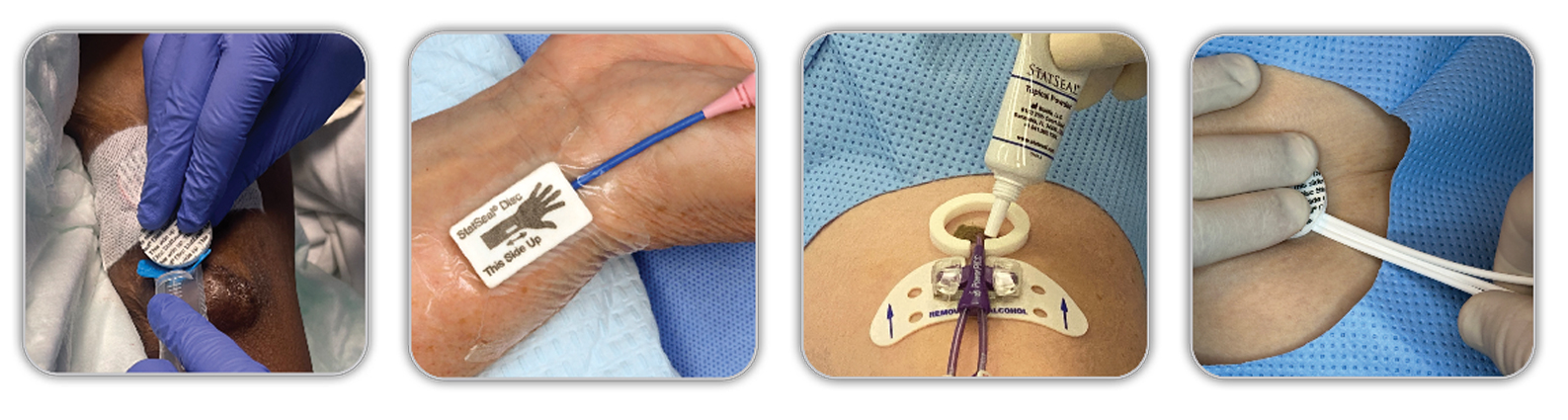
StatSeal helps hospitals protect patients and ease clinician burden. Its patented hypoallergenic formula minimizes dressing disruptions.4, 5
StatSeal accelerates hemostasis and standardizes hospital procedures, shortening recovery, enabling same-day discharge, and reducing complications across a range of high-volume procedures.1, 2, 6, 7
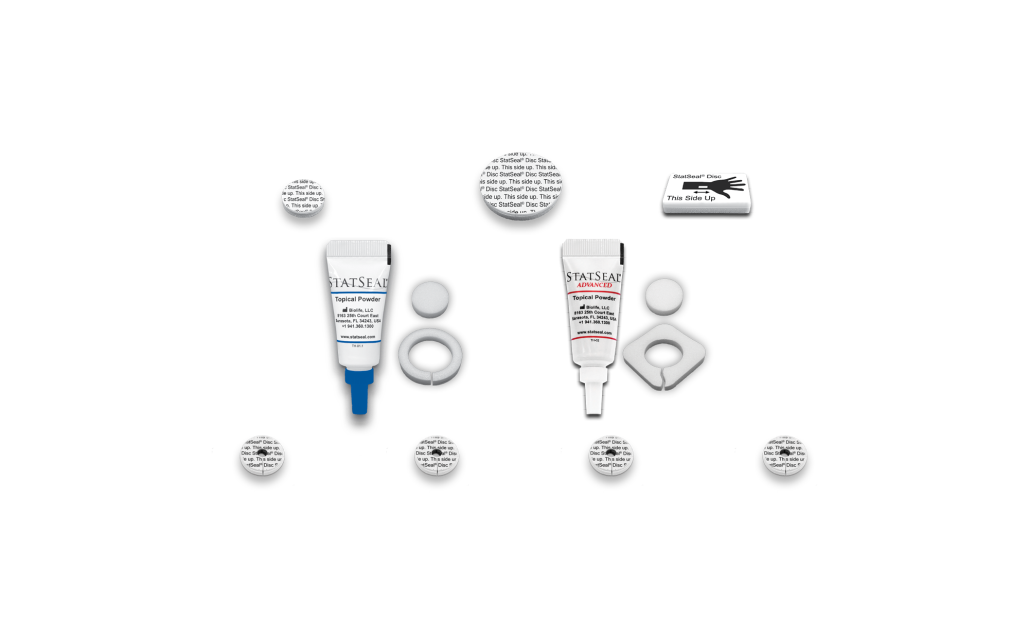
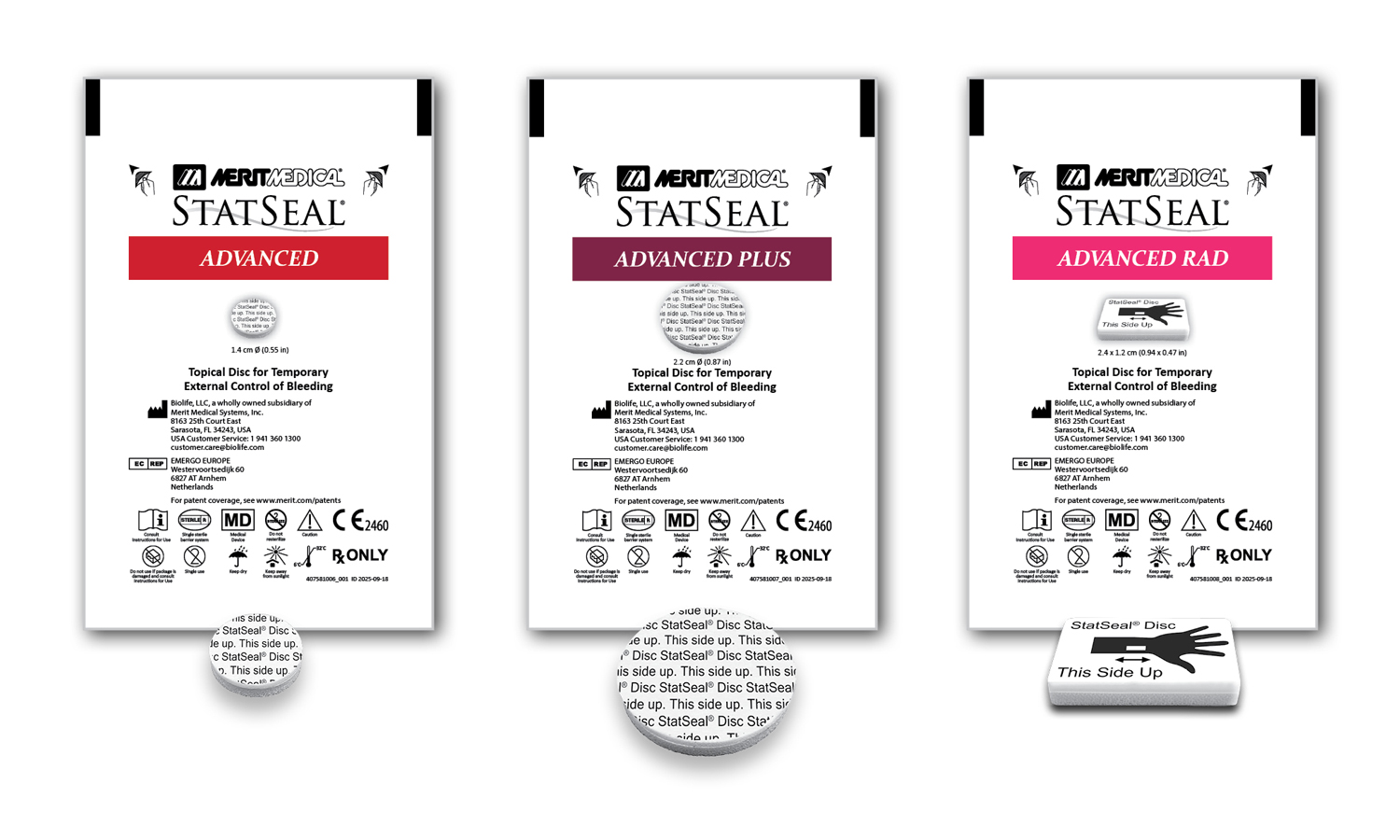
Advanced disc products support temporary control of bleeding from sheath and catheter removals.
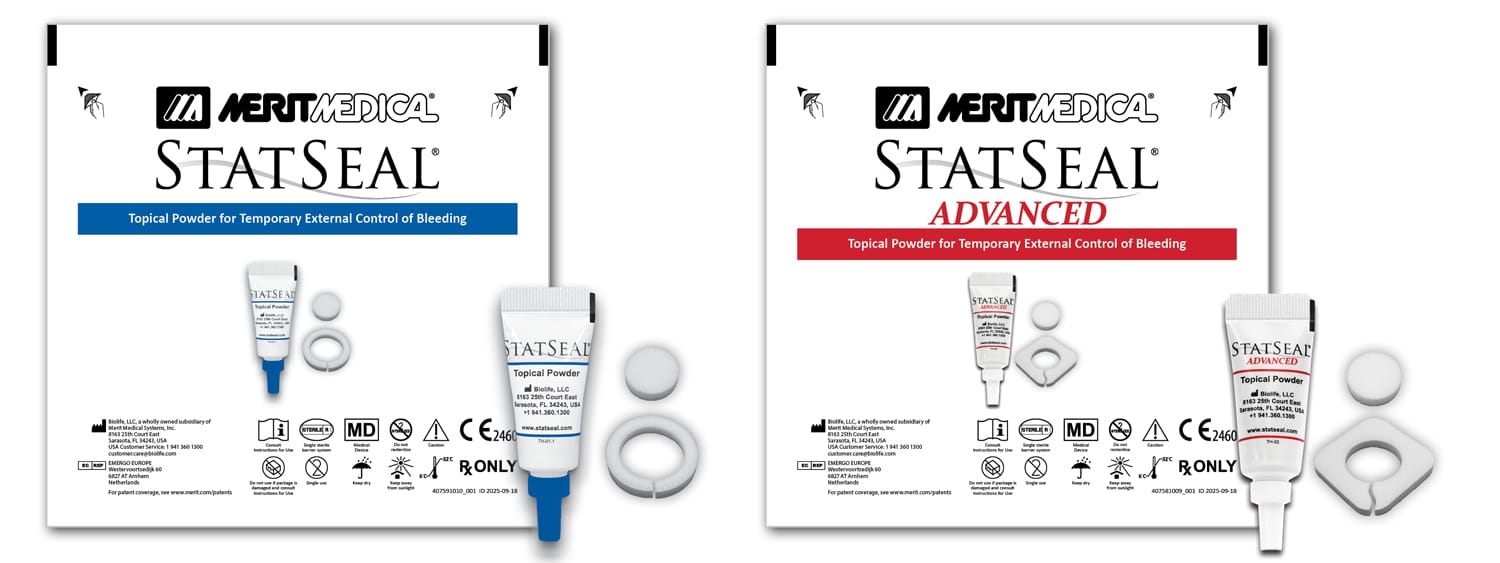
Powder products offer temporary external control of bleeding from indwelling catheters and procedural sites. Easy-pour tubes provide application accuracy.
Advanced Powder products offer temporary external control of bleeding from indwelling catheters and procedural sites. Easy-pour tubes provide application accuracy. Tubes also contain more powder for larger access sites.
Disc products offer temporary external control of bleeding from indwelling catheters. Disc sizes range from small to extra-large and fit a full range of catheters up to 18F.
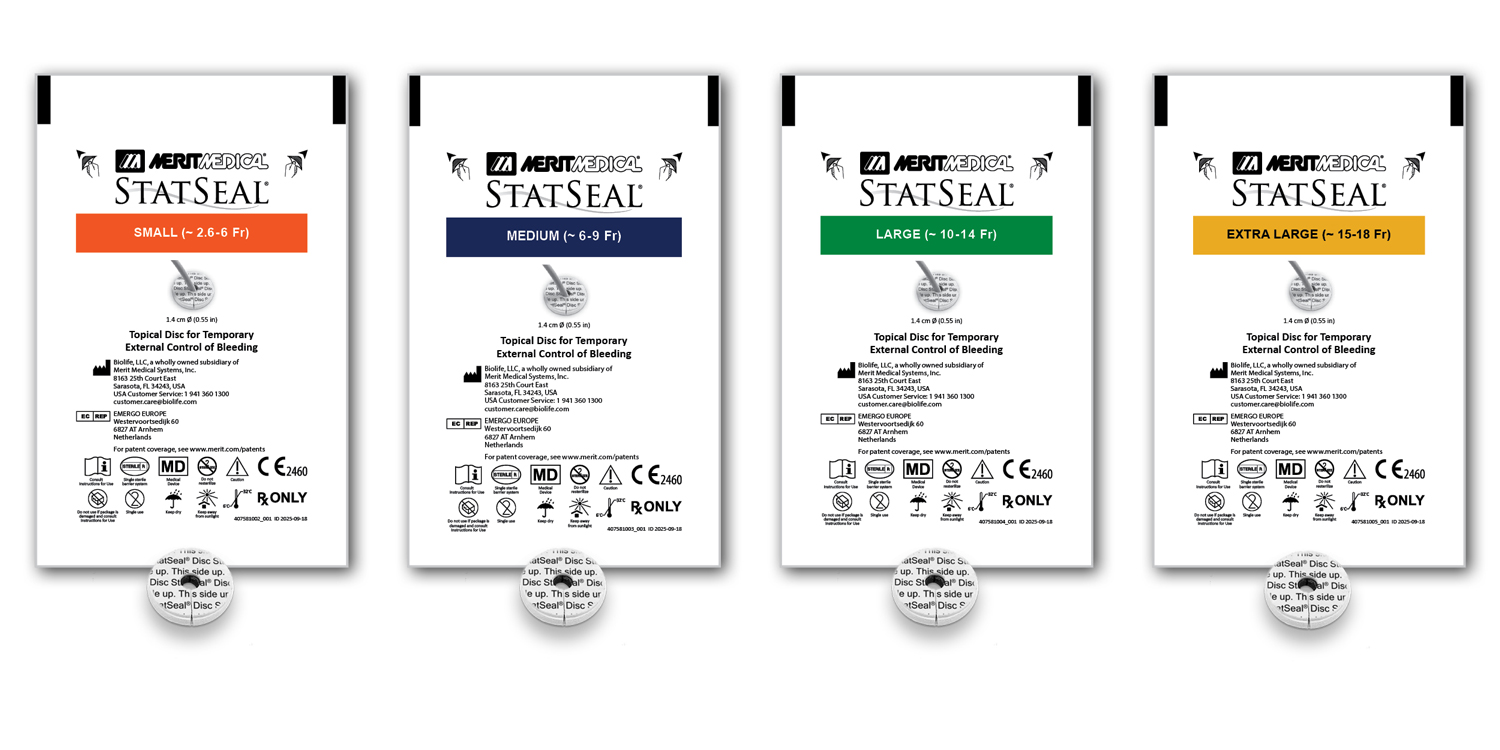

Current IFUs
StatSeal® Advanced Topical Disc Products – IFU (US Version) 
StatSeal® Advanced Topical Powder – IFU (US Version)
StatSeal® Topical Disc Products Sizes Small – Extra Large – IFU (US Version)

REFERENCES
1. Proscia et al. 2025. Int J Cardiol. doi: 10.1016/j.ijcard.2024.132740.
2. Safirstein et al. 2022. JACC Cardiovasc Interv. doi: 10.1016/j.jcin.2021.12.030.
3. Data on File.
4. Hastings and Barton. 2024. Br J Nurs. doi: 10.12968/bjon.2024.0164.
5. Blough, Hinson, and Hen. 2010. JAVA. doi: 10.2309/java.15-2-4.
6. Bagur et al. 2022. Int J Cardiol. doi: 10.1016/j.ijcard.2021.11.011.
7. Ayyaz et al. 2018. Cardiovasc Revasc Med. doi: 10.1016/j.carrev.2018.03.026.
408678001_001 ID 092126